Listen Now
Show Notes
Are you an introvert struggling to find your place in the workplace? Do you often feel overlooked or misunderstood because of your quiet nature?
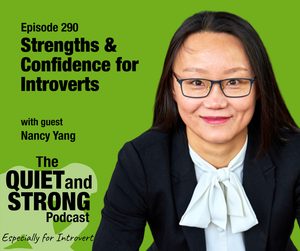
In this episode of The Quiet And Strong Podcast, host David Hall sits down with guest Sam Shepperd, a coach, speaker, and learning consultant for introverts.
Together, they delve into the challenges introverts face, the misconceptions surrounding introversion, and how embracing one’s introverted nature can lead to true success. Join the conversation as Sam shares insights from her decades of experience in learning and development, providing valuable strategies for introverts to navigate the workplace with authenticity and confidence.
In this episode, you will learn about understanding your strengths as an introvert, effectively communicating your needs to managers, and creating more inclusive work environments. Stay tuned for key takeaways such as nurturing introverted talents, overcoming imposter syndrome, and the importance of prioritizing introversion as part of diversity, equity, and inclusion efforts.
If you’re looking to thrive as an introvert in the workplace and embrace your authentic self, this episode is a must-listen. Tune in, learn, and be strong.
—
Sam Sheppard is a coach, speaker and learning consultant who is passionate about helping introverts to live life on their terms, freely and confidently.
A highly sensitive introvert herself, Sam provides coaching and digital products for introverts who want to develop authentic confidence, as well as helping them escape the 9-5, while also working with DEI stakeholders to create more inclusive workplaces for their introverted talent.
She has over 20 years’ experience of working in Learning and Development and is an ICF accredited coach; Sam has worked with hundreds of the world’s leading brands, including Google, Amazon and GSK, across 169 countries globally, a keynote speaker for companies such as Salesforce and Jellyfish and coached executives so that they can excel without having to pretend to be more extroverted.
Contact Sam:
Website: thisissamsheppard.com
Social: LinkedIn | Insta+Threads | TikTok
– – –
Contact the Host of the Quiet and Strong Podcast:
David Hall
Author, Speaker, Educator, Podcaster
quietandstrong.com
Gobio.link/quietandstrong
david [at] quietandstrong.com
Take the FREE Personality Assessment:
Typefinder Personality Assessment
Follow David on your favorite social platform:
Twitter | Facebook | Instagram | LinkedIn
Get David’s book:
Minding Your Time: Time Management, Productivity, and Success, Especially for Introverts
You may also like:
Quiet & Strong Merchandise
Timestamped Overview
[00:02:57] As a child, I felt like an outsider because I was introverted. Only as an adult did I discover I wasn’t alone, but had low confidence throughout my life.
[00:03:56] Feeling different, good feedback, imposter syndrome, joined I am Remarkable, worked with Google.
[00:07:59] Being highly sensitive means feeling deeply, empathizing with others, and being a valuable asset in professions involving helping others.
[00:12:50] Introverted leaders focus on the team, not personal glory. Combined with strengths like observation, empathy, creativity, problem-solving, and deep thinking, they yield positive outcomes. Research shows introverted leaders excel, especially with proactive, self-sufficient team members. Extroverts are seen as charismatic due to their vocal and larger presence.
[00:15:59] Introverts can be confident and outspoken; being shy is not a requirement. Understanding introversion helps overcome shyness.
[00:17:39] Authentic confidence is being comfortable with yourself, accepting who you are, and achieving goals without pretending to be someone else.
[00:23:39] Understanding one’s strengths and introverted nature helps make right decisions and avoid feeling stuck in wrong work environments. Communication with managers or seeking freedom from unhappy situations is crucial.
[00:26:03] Workplaces are not inclusive for introverts, who face additional barriers and pressure to change who they are.
[00:30:20] Introverts are told being quiet is a flaw, affecting success and inclusivity at work, with a negative impact on mental health.
[00:33:00] Workplaces must understand introversion, address bias in hiring, and acknowledge the needs of introverted talent to promote diversity and inclusion. Affinity bias limits opportunities for introverts in research and leadership roles.
[00:37:42] The writer created a spreadsheet to track time and energy levels, helping them determine what tasks drained or boosted their energy. This enabled them to schedule their time more effectively and enhance productivity. They used this knowledge to avoid scheduling meetings or interactions before important events and now offer this resource to clients.
[00:41:57] Helping introverts find their desired life through workplace inclusivity and exit strategies.
[00:43:15] Connect with me at [email protected] for more info and resources. Free personality assessment available on the website. Embrace being an introvert.
Key Takeaways
– Understanding your strengths and introverted nature can help make decisions that align with your needs and preferences.
– Many introverted individuals feel stuck in the wrong environment or team, but it’s important to recognize that there’s nothing wrong with them.
– Effective communication of your needs to a manager or making choices to improve your situation is crucial.
– Introverted leaders have unique strengths such as being observant, empathetic, creative, and good problem-solvers.
– Research suggests that introverted leaders have better outcomes, especially with self-sufficient team members, as they allow for autonomy.
– Introverted employees often face misconceptions and bias in the workplace, limiting their opportunities for success.
– Self-awareness is the foundation of personal change and growth, understanding one’s limiting beliefs and flipping them is crucial.
– Workplaces should prioritize understanding introversion and accommodate the needs of introverted talent.
– Bias in hiring systems and affinity bias often undervalue introverted individuals and hinder their opportunities for leadership roles.
– Embracing introversion can lead to personal and professional success by leveraging strengths and making decisions that prioritize well-being.
Podcast Transcript
Sam Sheppard [00:00:00]:
If introverted talents are nurtured by their employers, they’re going to thrive and they’re going to perform at an optimal level. And that doesn’t just benefit those individual employees, it benefits everyone. Right? It’s gonna impact retention. It’s gonna impact productivity. It’s gonna impact profitability. And so by those making decisions for hiring, those in management roles, and those in charge of diversity, equity, inclusion, understanding introversion on a on a deeper level and understanding that introversion brings strengths, and can be an asset to that workplace and the ways in which they can support introverts, then that for me would be a very powerful way of improving the workplace for all.
David Hall [00:00:57]:
Hello, and welcome to episode 143 of the Quiet and Strong podcast, especially for introverts. I’m your host, David Hall, and the creator of quietandstong.com. This is a weekly podcast dedicated to understanding the strengths and needs of introverts. Introversion is not something to fix, but to be embraced. Normally, we’ll our each episode on a Monday. Be sure to subscribe on your favorite platform. Leave a review. That would mean a lot to me.
David Hall [00:01:23]:
Tell a friend about the podcast. Help get the word out there that introversion is a beautiful thing. Sam Shepherd is a coach, speaker, and learning consultant who’s passionate about helping introverts to live life on their terms freely and confidently. A highly sensitive introvert herself, Sam provides coaching and digital products for introverts who wanna develop authentic confidence as well as helping them escape the 9 to 5 while also working with DEI stakeholders to create more inclusive workplaces for their introverted talent. She has over 20 years experience of working in learning and development and is a ICF accredited coach. Sam has Worked with hundreds of the world’s leading brands, including Google, Amazon, GSK across 169 countries globally. She’s a keynote speaker for companies such as Salesforce and Jellyfish and as coach executives so they can excel Without having to pretend to be more extroverted. Alright.
David Hall [00:02:26]:
Well, welcome to the Quiet and Strong podcast, Sam. Sam, it’s so good to have you on the podcast today.
Sam Sheppard [00:02:32]:
David, it’s my pleasure. Thank you so much for inviting me.
David Hall [00:02:35]:
Absolutely. So you do some great work. You know, we’re connected on LinkedIn, and I love your LinkedIn post. And, we’re gonna get into all the all the work that you do helping introverts. And, Let’s, first start out with tell us a little bit about your journey as an introvert and now to helping other introverts.
Sam Sheppard [00:02:57]:
Sure thing. So as a child, I always felt like I was a bit of an outsider because I was an introvert, but at that point in my life wasn’t aware of the terminology or what It meant I just thought I was weird or different in some way. I much preferred my own company to the company of others. I didn’t feel comfortable in groups. I just love to sit and read and, be immersed in my own imagination. And it was only really when I became an adult that I started to discover there was a name for the type of personality that I had and that I wasn’t alone. And I think there’s something really powerful in knowing that you’re not alone and that there are other people that share characteristics that you have. But I had very low confidence for much of my life throughout my formative of years, but also into adulthood.
Sam Sheppard [00:03:56]:
And part of that was fed by this concept of I feel different, I feel weird, I’m othered. I don’t fit in in some way fundamentally, whether that be to society or the workplace, whatever it may be. And, actually, my confidence started build independently of me being an introvert or or appreciating my introverted nature. And that’s because I’ve been working in learning and development for over 20 years now, and I consistently had very, very good feedback. And I always suffered with limiting beliefs in imposter syndrome, but the constant feedback that was Telling me I was very good at what I was doing slowly helped to break down those narratives that I constructed in the limiting beliefs. And then a few years ago, I joined a project with Google called I am Remarkable, which was focused on helping those from underrepresented groups to celebrate their accomplishments and breakthrough glass ceilings. And when I was on that project, I was introduced to the term imposter syndrome for the 1st time, and the concept of limiting beliefs as in concrete terminology for that. And I realized that not only is that what I’ve been experiencing myself, but in the clients I was working with via Google, which was I trained over six 1,000 facilitators across a 169 countries globally, so I was working with a huge audience.
Sam Sheppard [00:05:24]:
Those that were sharing the experience that I had had were primarily introverts. And it was fellow introverts that were struggling with limiting beliefs in imposter syndrome. And it makes sense if you think about it, David, because society tells us there’s something wrong with us. Even though we’re 50% of the population, We’re in we’re in a a world which is biased towards extroverts and says that extrovert natural tendencies are the right way to be. And so that, for me, was the real light bulb moment where I started connecting all those dots, And I was able to do even more work on overcoming my limiting beliefs and navigating my imposter syndrome to become the best version of me so far, the most confident version of me so far. And now I legitimately see introversion as a superpower.
David Hall [00:06:20]:
Awesome. So where did you discover the term introvert and how did you discover what it was? What was there a certain resource that you used or?
Sam Sheppard [00:06:29]:
In all honesty, I can’t remember a particular moment or a resource where I discovered the term. I just know that it’s It’s a term that I’ve been aware of for many years, but one that I didn’t discover until I was an adult. But at the point that I was on the Google project and I had that realization that I’ve just described, that tipped me into research mode, because I do love to research. And and I I really immersed myself in research into introversion and discovered things like the neurobiology of introversion, which was a completely new concept to me. And it really by my understanding of what it meant to be an introvert and also things like typically introverted strengths.
David Hall [00:07:14]:
So it’s part of our biology. Right?
Sam Sheppard [00:07:17]:
It is. Like, our brains are literally different to those of extroverts. And something like the need to think and process before you respond to a question, that’s a legitimate need because we have different biology in our brains, like the neurons of different lengths, for example. And and so it’s just how we’re built.
David Hall [00:07:37]:
Yeah. So we have a need, but it’s also a great strength because you were just talking about that you love to do research. And, that’s part of your introverted gifts, I’m sure. It’s we we we like to think deep we’re deep thinkers. That’s that’s what what the heart of it is. We’re deep thinkers.
Sam Sheppard [00:07:52]:
Absolutely.
David Hall [00:07:54]:
You’re also a highly sensitive introvert, so tell us what it means to be highly sensitive.
Sam Sheppard [00:07:59]:
So someone who’s highly sensitive is someone who will potentially feel more deeply often we can feel the emotions of others, and we’re more sensitive to our environment. So we will be impacted by, for example, loud noises or the weather even. And often, people who are highly sensitive again feel that there’s something wrong with them. But being able to be more sensitive to your environment again is an additional strength. It’s particularly impactful in terms of our ability to empathize wise with other people and to more meaningfully help others. So anybody who’s in a profession where they’re helping other people, if they are highly sensitive, is actually an asset to be highly sensitive in that context.
David Hall [00:08:47]:
Yeah. And so as we’re talking about introversion or being highly sensitive, There’s gifts that come with it. There’s needs that come with it. We’re not all the same. For whatever reason, I’m not highly sensitive I’ve definitely had lots of conversations with folks like you and I I realized, yeah, you have a gift for some reason I don’t have. I don’t know why. But at the same time, My empathy comes from somewhere else. You know, I instead of having the gift like you do of feeling other people’s emotions, I’m thinking about other people.
David Hall [00:09:18]:
So I’m I’m using my imagination and my introverted gifts of thinking and reflecting and inter if I’m trying to help someone, Thinking about, okay, what’s it like to be Sam? You know, like, what what is she going through? And I’m I’m using my mind. And so it’s just different. And and neither are good or bad. And that’s Something that that’s something that I just really wanna stress. And, you know, so not all introverts are highly sensitive. There’s some highly sensitive extroverts as well, And these things are just all really important to understand.
Sam Sheppard [00:09:48]:
I mean, absolutely, David. And I think that’s the beauty of diversity. The world needs every type. It needs sensitive extroverts and sensitive introverts, but then also those that are more logical and thinking types. But rather than having a bias towards 1 particular type, appreciating that diversity and appreciating the unique gifts that each individual type of person brings would benefit everyone.
David Hall [00:10:14]:
Yeah. Yeah. Definitely. Well said there. So What’s the strength or two that that you have because you’re an introvert?
Sam Sheppard [00:10:23]:
So you’ve mentioned already being a deep thinker. I I am someone who thinks deeply about absolutely everything, and it means I’m particularly good at problem solving. And in my line of work where I’m facilitating training quite commonly or I’m speaking to an audience, having that level and depth of thought enables me to be able to pivot in accordance to what’s happening in in the moment in the room, which is why my training and my speaking has been so well received. And then combined with the highly sensitive aspects of my personality, I can feel what my delegates are feeling, and therefore, I can respond accordingly. So it makes me much more conscious of what’s going on in a room and able to adapt to it so that the people in front of me are having the best possible experience and are able to experience some sort of trans trans
David Hall [00:11:18]:
Awesome. Is there any other strengths that you’ve seen in in yourself or other people that you’ve worked with that come because they’re an introvert?
Sam Sheppard [00:11:27]:
I mean, as you mentioned, we’re not monolith, but typically, the strengths that introverts share tend to be things like creativity, the ability to listen well, being highly observant, and therefore, again, if we’re talking about being able to interpret What’s going on for other people? If you’re highly observant, often you are picking things up from other people’s body language that the majority of the population aren’t going to notice. Introverts also typically make great leaders even though that contravenes how most people think of great leaders. And that’s actually something I’m particularly passionate about because with a lot of the clients that I work alongside who are introverted leaders, they are being told by their businesses that they don’t have sufficient presence or that there is doubt about their ability to be a great leader even though they they are having the impact that would evidence otherwise.
David Hall [00:12:26]:
Let’s talk about that. I was gonna ask you next about some myths and that’s a big introverts Can’t be great leaders.
Sam Sheppard [00:12:33]:
Yeah.
David Hall [00:12:33]:
So so why either why do you think that is that that myth exists or what is it? You mentioned that introverts could be great leaders, so why is that?
Sam Sheppard [00:12:45]:
Why can introverts be great leaders? Just to
David Hall [00:12:47]:
clarify, I’m gonna ask Yeah. Yes.
Sam Sheppard [00:12:50]:
So but typically don’t want to be in the spotlight. So therefore, as a leader, they are always thinking about the people that they are leading, And that’s what makes them great leaders because they’re not seeking kind of their own personal glory. They’re really thinking about what’s gonna make the difference and move needle. So that combined with the sort of strengths that we’ve just talked about, someone who’s highly observant, pathetic, who’s creative, who’s a good problem solver, who’s a deep thinker, who’s not making rash decisions. They’re thinking things through, thinking deeply. All of those things combine to have really positive outcomes. And there’s quite a lot of research in this area that does evidence that when you’ve got introverted and extroverted leaders leading teams, introverts typically have better outcomes as leaders than extroverts, especially with team members that are more proactive themselves or self sufficient themselves because they allow those individuals the autonomy to make the right decisions to get those outcomes. The Conception, I think, just to kind of circle back around to the starting point for this question, comes from because extroverted leaders tend to be more vocal, naturally, they are perceived as charismatic And they’re perceived as having, like, a bigger presence.
Sam Sheppard [00:14:18]:
And so that leads to the misconception that they’re actually better leaders when actually they’re just more visible lead and the research substantiates that it’s actually introvertedly introverted leaders that tend to have to outcomes.
David Hall [00:14:31]:
Awesome. Yeah. Very good. Introverts can be amazing leaders and using their introverted gifts. I know, and extroverts can too, but it’s funny that people think that. And let me just go back to you know, you’ve said introverts make up half The population. So of course, we’re we’re great leaders and we do many things. We just might do it differently and And we can be very successful.
David Hall [00:14:54]:
We just might succeed differently as introverted leaders. And that that’s a key to remember.
Sam Sheppard [00:15:00]:
So Is there
David Hall [00:15:00]:
any is there any other myths that you wanna bust today?
Sam Sheppard [00:15:04]:
Yes, actually. It’s around confidence and shyness. So commonly, introverts are thought of as being shy and socially awkward or socially anxious and lacking in confidence. And whilst that can be true, and I myself have had for most of my life, all of these things. So in addition to being an introvert, I was shy and I was socially awkward and I was anxious and I lacked confidence, but not all introverts are shy. Not all introverts are socially awkward, and not all introverts lack confidence. And right now, as I’ve mentioned, I have you stepped into my most confident self, my intuition remains the same. Right? Like, that’s a very different thing.
Sam Sheppard [00:15:48]:
And so for me, that would probably be alongside the leadership aspect, the biggest myth. It’s the introverts, they’re shy, they’re awkward, they lack confidence.
David Hall [00:15:59]:
Yeah. And so some introverts have never been shy. And sometimes I think that’s where the doubt comes about, the 50% Number because there’s some really quite confident, even outspoken introverts and people aren’t putting them into the introverted category, but they’re deep thinkers And they have deep thinking gifts that come with that. And then there’s there’s introverts that were shy Like myself and sounds like yourself as well. And a lot of my overcoming shyness was getting to know my introversion, You know? With getting to know you know what? Sometimes, quite often, I’m gonna think before I speak. It’s normal. And as we mentioned, it’s It’s part of my biology. I’m going to think first, but it’s good.
David Hall [00:16:43]:
Great gifts come from that. And sometimes I’m going to need to recharge, Spend some time alone. And it’s not just for spending time alone. Isn’t just for recharging. I need some time alone to think strategically, to be creative, So to have some focus to actually get some work done and understanding those things that I need to prepare before things like before a speech or a presentation. Understanding those things for me helped me overcome my shyness and anxiety is and and that’s and I’m not shy anymore. And But the good news is if anybody is shy, there are things that they can do to overcome their shyness. But like you said Very well.
David Hall [00:17:25]:
We’re always gonna be introverts. We’re always gonna be deep thinkers. Yeah. It’s just, you know, we can be confident about it. So tell us about that. I I loved I loved reading on your website and your post about being authentically confident. Tell us what that means to you.
Sam Sheppard [00:17:39]:
So for me, authentic confidence is about feeling comfortable with who you are, and it’s a bit like what you just touched upon, David. It’s about understanding who you are and accepting it so that you can achieve whatever goals that you have without trying to be someone else or or pretending to be someone else or pretending to be more extroverted. So My own journey has been one where I leaned into self acceptance and finally managed to become a confident version of myself through overturning imposter syndrome and limiting beliefs. And for me, that was authentic confidence because I don’t want to be different. I don’t wanna be anyone other than self, I’m accepting myself and I’m I’m working very much with my strengths rather than trying to develop what I perceive as my weaknesses.
David Hall [00:18:30]:
Yeah. And that’s the thing. Like I think when I didn’t understand my strengths, I thought they were weaknesses, This is. But in reality, what I thought was weaknesses were my greatest strengths. And once I embrace those, I I found more success and happiness than ever.
Sam Sheppard [00:18:48]:
Absolutely. I think there’s a lot about introversion in general. Like, we’ve talked about some of the myths, but really, all introversion is is the way we gain or lose energy. So gaining energy through alone time and losing energy through interactions with others even if we are enjoying those interactions with other people. And it’s about the needs that we’ve talked about already, things like having time to think to process information. So a lot of the time, When you you mentioned the 50% statistic, a lot of the time, people are just not understanding what it means to be an introvert. And they’ll say things like I’m an extroverted introvert, just meaning that they’re charismatic or they enjoy social events. But but, really, it’s not.
Sam Sheppard [00:19:32]:
It’s about how you gain or lose energy and your your needs to have thinking time to process.
David Hall [00:19:39]:
Yeah. Yeah. You might you might be getting me started on something. So I it it it’s so funny when people say that. I I encounter that all the time when I’m talking with people and they say, well, sometimes I’m a little of both. And I’m like, Okay. You know, are you a deep thinker? Just because you can be social and you enjoy being social, that doesn’t make you an extrovert. It just means that you’re an introvert Being social, enjoying other people.
David Hall [00:20:05]:
It’s but you’re still an introvert. And so often I I find that people just want the label. Like, I’m an introvert or I’m an extrovert or ambivert, which I don’t particularly use, or I’m an extroverted introvert or introverted extrovert. That doesn’t help unless you understand Your strengths and your needs. The label is just a tool, but if you don’t understand what your strengths are, the label doesn’t matter. But just because you’re being social Or, you know, I’m on this I love podcasting. I’m not it doesn’t make me extrovert.
Sam Sheppard [00:20:39]:
So true. I mean, in my spare time, I dance and people are always surprised Yeah. Yeah. When they see me at dance events because they’re like, but you’re an introvert. It doesn’t mean to say air con dance will be
David Hall [00:20:50]:
Our our fight goes on. Right, Sam? So we gotta keep busting is missed. Yeah. So anyway and, you know, but But doing the podcast, I do have to prepare. So I might have to prepare differently than an extroverted podcast host, but I still love it. You know, it doesn’t make me an extrovert. It just means that I did my my work. I’m using my strengths, but I, you know, I prepared that kind of thing.
David Hall [00:21:14]:
So, So how do you help somebody gain confidence or overcome their limiting beliefs if they have them?
Sam Sheppard [00:21:22]:
I mean, that’s a very complex question, David, because it’s
David Hall [00:21:25]:
Of course.
Sam Sheppard [00:21:25]:
Of course. Depends on the individual. But broadly, it starts with helping them develop self awareness. You’ve mentioned yourself that in your own journey, having that understanding of who you were and your strengths was what really helped you. And that’s why the foundation of any change is self awareness. You can’t understand until you’ve got the awareness of what your limiting beliefs are, where they came from, you know, the stories that you’ve been telling yourself, what’s at the root of your imposter syndrome if you have it or any, you know, confidence issues. And then once you have the self awareness, you can start to break down and deconstruct and flip those narratives and overturn those limiting beliefs. So with my clients, I go into quite a lot of detail as to how to flip limiting beliefs and how to reprogram almost those narratives that you tell yourself.
Sam Sheppard [00:22:22]:
And with that comes a lot of time and a lot of practice as well because we we’ve got a default and we we go back to the default. And so it takes time to overcome that. And then a big aspect of it is also something that you’ve talked about for yourself, which is the recognizing your strengths and thinking about how you can leverage your strengths and focus on those rather than perceived weaknesses to really get to where you want to be and do what you want to do.
David Hall [00:22:51]:
Yeah. And, You know, you said earlier, we all have different strengths and it that’s important to recognize. It that that that That’s part of it. Like, you can’t compare yourself to somebody else that has a different set of strengths than you do and think, you know, why am I not like that person? But instead, Realizing why we each have our own strengths and, you know, we have ours, and the world needs ours.
Sam Sheppard [00:23:17]:
Exactly. Working with what you’ve got.
David Hall [00:23:21]:
Yeah. So speaking of working, how does this all translate into the workplace?
Sam Sheppard [00:23:26]:
Can you clarify the question?
David Hall [00:23:28]:
Sure. So how does understanding your introversion why is it important to know in the in the work that you do And or for people that are working for you.
Sam Sheppard [00:23:39]:
So if you understand your strengths and you understand your introverted nature, it’s going to help you to make decisions that are the right decisions for you. By that, I mean, there are people in the workplace that are feeling stuck and are feeling that they don’t fit in and that there’s something wrong with them, when actually there’s nothing wrong with them, they’re just in the wrong environment for them or they’re in a team that doesn’t appreciate their introverted nature and is fueling those those doubts about themselves. And so by understanding yourself, you are either able to communicate that to a manager if it’s a role that you’re happy in and you want stay in, or you’re able to make decisions and choices to free yourself from a situation that you’re unhappy in rather than being stuck because some of the people that I’ve either worked with or interacted with as part of my work, they’ve been stuck feeling unhappy in what they’re doing for years and sometimes decades because they don’t feel that there’s a way out for them. They don’t feel that there’s way forward.
David Hall [00:24:50]:
And I know that you do a lot of work with diversity, equity, and inclusion. So how is it understanding introversion Traversion or extroversion, part of that work.
Sam Sheppard [00:25:00]:
So workplaces, much like society itself is biased in favor of attribution. And most workplaces are set up in a way that makes it not a level playing field for the introverted employees in the organization. One example would be the open office structure that most offices have because open offices are very overstimulating for introverts. It makes it very difficult for introverts to focus. There’s so much noise. There’s so much going on, and that’s very draining and can impact mental health and well-being as well. Another example would be the way that meetings are structured. So most meetings thing are seen as, you know, the most valuable players that that and, you know, that that they’re making a great contribution regardless of how valuable what they actually said was.
Sam Sheppard [00:26:03]:
And there’s not really an opportunity for an introvert to contribute meaningfully to the way meetings are structured in in typical work environments. And all of this means that workplaces are not an inclusive environment for introverts. And then if you layer in the of the 50% of employees who are introverted, of those employees, there are going to be individuals who are also facing other barriers at work. So whether that be on the basis of ethnicity or sexuality or level of ability, disability, etcetera, Sure. You’ve got that intersectionality aspect where they’re already facing barriers to success and then introversion becomes another barrier because of the way it’s perceived. Quite a lot of introverts report that in performance reviews, managers are telling them that they need to be less quiet, for example, even if they’re meeting all of their targets and overperforming in terms of their deliverables. The the the feedback is you’re too quiet. You need to change fundamentally who you are because of these perceptions around introversion.
Sam Sheppard [00:27:13]:
And so for me, that makes introversion a diversity, equity, and inclusion issue. And I believe that every company should have on their DEI agendas, factoring introversion into how they’re going to make their workplaces more equitable and more inclusive of employees. Because if introverted talents are nurtured by their employers, they’re going to thrive and they’re going to perform at an optimal level. And that doesn’t just benefit those individual employees, it benefits everyone. Right? It’s gonna impact retention. It’s gonna impact productivity is gonna impact profitability. And so by those making decisions for hiring, those in management roles and those in charge of diversity, equity, inclusion, understanding introversion on a on a deeper level and understanding that introversion brings strengths and can be an asset to that workplace and the ways in which they can support introverts, then that for me would be a very powerful way of improving the workplace for all.
David Hall [00:28:21]:
Awesome. How do how have you seen companies start to build this awareness of introversion, extroversion as part of maybe DEI work?
Sam Sheppard [00:28:31]:
Honestly, David, it’s a it’s a it’s a work in progress. So Yeah. This is a vision that I have had since I left the Google project and started trying to build something around this. But it’s, in all honesty, something that I am facing as a challenge at the moment because the vast majority of companies don’t see this as a legitimate need. There’s a small minority of country companies that make contribution part of their diversity, equity, and inclusion agendas, but they are the minority. And Most of what I’ve been doing over the last 18 months is raising awareness to try and get this buy in, but it is still very much a work in progress. And most of my clients have been introverts themselves as opposed to the companies.
David Hall [00:29:18]:
Yeah. And it’s so important because If you don’t understand your gifts, your strengths, your needs, you’re not gonna do your best work. And too often, I see people that are brilliant, but their voices aren’t being heard because they don’t understand how to Make their voice heard. They don’t understand how to, you know, speak up in a meeting, you know, how maybe they don’t realize that They need to do some preparation. Just just as an example, they they need to do some preparation ahead of time, get the agenda ahead of time, just things like that. No. And that Or that the people in the meeting need to realize that they may not be It’s talking nonstop. Somebody else might be, but that doesn’t mean that that introvert’s idea isn’t brilliant because they’ve thought it through.
Sam Sheppard [00:30:10]:
Yeah. And and for me, that’s actually the bigger thing. When it comes to the workplace, it’s less around the introvert recognizing their strengths. All of that is very important.
David Hall [00:30:19]:
Okay.
Sam Sheppard [00:30:20]:
It’s more around the systemic aspect of they are being told by their colleagues and their managers that the introverted nature that being quiet is something that’s a flaw, that’s fundamentally wrong, that it’s a barrier to their success, that they’re not an asset to the organization. And at a systemic level, there is a misconception of introversion that is causing, like, workplaces to be non inclusive and there to be a drain on talent. Because we we we’ve heard about quiet quitting And we’re aware that in a post pandemic world, there’s quite a lot of employees that are struggling with being told they need to return to the office. We’re hearing more than ever about mental health and well-being issues in the workplace. And quite a lot of that is stemming from these systemic issues in my opinion.
David Hall [00:31:14]:
Yeah. So it’s interesting because, Like I said, you know, I was definitely shy when I was younger through college and, you know, thinking something was wrong with me. I’ve overcome that shyness. I’m very confident. I can be outspoken at times. And so in comparison, I think I’m talking a lot. Right. But the reality is I may be talking far more than I used to, but I’m always gonna be a deep thinker.
David Hall [00:31:45]:
And that’s a good thing about me. And sometimes someone might say that I’m quiet and I could take offense at that, But in reality, well, yeah, I’m always gonna be quiet in some regard because I I am gonna be thinking. It’s that’s my natural That’s my natural way. You know, as introverts, we think, and then we put together what we think are the most important ideas instead of thinking out loud. And so what you’re saying is, you know, we can have the most confident introverts, but there still can be a bias in our organizations that think That person’s quiet even if if themselves, they’re very confident. So there’s a couple different things going on there. There’s the bias that can exist And also not not really leveraging, like, you know, having someone in an open office plan like you talked about when A different environment would be better. And then there’s the introvert themselves learning to understand their strengths and needs.
David Hall [00:32:44]:
So, you know, both of those things Need to happen. And, you know, how can we make our environments at work better for introverts? And how can the introverts themselves understand what they can do to Be that have that authentic confidence that you talk about.
Sam Sheppard [00:33:00]:
So for workplaces, it’s about those people that are in charge of hiring, in charge of managing people, in charge of diversity, equity, and inclusion to take responsibility, take ownership for understanding what introversion means and what the introverted talent needs. You mentioned bias there. There’s a proven bias in the hiring system, an affinity bias that perceives introverts as being lesser in some way than extroverts. And I get lots of people messaging me on platforms like LinkedIn saying that they had an experience where they’ve applied for a role, which isn’t a role that would be one that’s typically seen as an extroverted role. So, for example, a research position, which you would think would be great for an introvert. And when they had the feedback about not being successful for the role, the feedback was, oh, we thought you’d be too introverted. And there’s no specific detail about what that means when they push, we just think you’d be too introverted even though, like I mentioned, it’s a a research role or something along those lines. And the same happens for leadership positions because there’s an affinity bias in the workplace.
Sam Sheppard [00:34:17]:
As we’ve mentioned already, the perception is that extroverts make better leaders even though statistically that’s not too, and those hiring often are extroverts themselves, they are more likely to hire the candidate that’s displaying extra tendencies than the quieter or introverted candidate regardless of qualifications, experience, etcetera. And that in itself is an issue in addition to what we’ve already talked about, which is open office structures, meetings, etcetera. So by understanding introversion and the strengths that it brings And by understanding the needs that introverts have, introverted talent can be supported and nurtured. And as I mentioned already, both the introverts and the companies will win in that scenario. And then for introverts themselves, by understanding their own strengths and how to leverage them, they are able to achieve on a personal and professional level whatever it is that they would want to achieve. And as I’ve as I’ve already discussed, they’re able to make better decisions for themselves to have optimum well-being as well as optimal success.
David Hall [00:35:27]:
Yeah. Part of that bias, introverts can be guilty of it themselves. Introverts can be, you know, maybe hiring or looking Looking at how leadership should be. And sometimes introverts can buy into that extrovert ideal, like this is what a leader should be like. And so it’s not just extroverts sometimes that might have that bias, so that’s definitely something that we have to work on for all.
Sam Sheppard [00:35:53]:
Yeah. So true, David. I publish a a LinkedIn newsletter every Fridays, I think you know. And one of the additions which was on introverted leaders, I had so many people commenting or messaging me who were introverts expressing surprise, and they weren’t aware of the Research that substantiates this even though, you know, it’s it’s, you know, it’s quite widely available research. They were aware of the research, and they weren’t aware that actually, you know, they would particularly be set up for having the strengths that leaders can use to excel in that role.
David Hall [00:36:30]:
Absolutely. Alright. So anything else that you would like to talk about as far as the work you do with DEI?
Sam Sheppard [00:36:38]:
I think just if anybody listens to this, David, who’s working in that field, just an invitation to be open to doing a little bit of exploration. Even if it’s not with me, just really, you know, doing some exploration into what introversion really means and really, you know, understanding their introverted talents and their needs a little bit better because that would really make a huge difference not just to those introverts themselves, but to the business as a whole.
David Hall [00:37:10]:
Awesome. You know, we talked a little bit about in the beginning that, you know, we definitely have needs. So just one last thing on needs. As we manage our time, it’s it’s definitely I wrote my 1st book on on, time management for introverts because As I was a very busy person and discovering my introversion, I realized, oh, there’s some things that I need that aren’t called out in these books I’m reading. Right? So do you have any tips? Have you have you found anything for time management? And how do you, get your quiet time?
Sam Sheppard [00:37:42]:
So personally, I made a spreadsheet to audit how I was spending my time and audit how my energy was impacted according to different tasks throughout the day. So for a period of 2 weeks, I’d go through block out exactly how I was spending my time and then color code where my energy levels were to be able to really see what was giving me the most energy? What was the biggest drains on my energy? And how that correlated to how I was spending my time? Because even though Notion, you think you know what would drain, what would, you know, boost your energy, sometimes we are too in it to really have that awareness. So I made that spreadsheet and it helped me to really be very clear on how best to spend my time to preserve my energy and boost my productivity as a result. And then I use that to really think about how I schedule my time. And it’s things like because I facilitate training, an example would be this week, Monday Tuesday, I was facilitating leadership training to like, corporate leadership training, 2 day event. So then I deliberately didn’t schedule in any meetings or anything that I would need to talk to a human yesterday so that I had that space to recharge before, for example, this interview today. And it’s because I’m very clear on what works for me and what doesn’t. And actually, I’ve made that resource available to my clients now.
Sam Sheppard [00:39:13]:
I actually have that in my standstill. But, yeah, for me, it was it was again coming back to that awareness and really getting an an understanding of what drains, what gives me energy, and using that when I’m planning how I’m spending my time.
David Hall [00:39:29]:
Yeah. That’s amazing. Because, again, you can do that kind of work because maybe someone would say, oh, well, she can’t be a introvert because she’s, you know, doing this 2 day 2 day event, but you can absolutely do it. You have to prepare, and then you have to plan your recharge.
Sam Sheppard [00:39:45]:
Exactly. And and not just the recharge after, like, I made sure that the day before, I wasn’t interacting with humans either. So I had A a quiet Sunday so that I have, you know, that kind of buffer and I I could recharge. I would be be fully charged before the Monday, Tuesday. And then once I got home on Tuesday, that was it.
David Hall [00:40:06]:
Yeah. I’ve actually I’ve heard that called precharge and so I’ve used that. So
Sam Sheppard [00:40:09]:
I’ve heard Yeah.
David Hall [00:40:10]:
You pre you precharge and then you recharge. And and, you know, I think you said too, it’s something You might really enjoy it, but it still might you might need to recharge afterward because
Sam Sheppard [00:40:22]:
Oh, I love it. I absolutely love facilitating training, but I just need that time because it literally takes everything out of me.
David Hall [00:40:29]:
Yeah. Alright. And, you know, I I am so enjoying this conversation, but I might need a break after a note, you know, Just to be honest. And I planned that. I planned that. So I don’t schedule any I, just as the podcast example, you know, I I have at least an hour before and an hour after. And and definitely, you just gotta think about that for whatever it is you’re doing. Like, okay, do I need to prepare for this? Do I need to, you know, have time after this? And that’s that’s key.
Sam Sheppard [00:40:57]:
And if I may, David, just on that and thinking back to what we were just talking about, that’s not the way that most employees have their time structured. Because in most office environments, depending on the level that you’re at in a company, you’re in back to back meetings for quite a significant chunk of your working week. And the more senior you become, the more it’s like a Badge of honor. If you’re in back to back meetings, the busier you are, the more your value is perceived as being higher. Yet for introverts, being in back to back meetings is the worst thing possible for their productivity and their well-being.
David Hall [00:41:34]:
Yeah. Absolutely. Yeah. You’d like you said, we all have a varying amount of control over our calendars. And so but as much as possible, if you can think about, okay, I’m gonna need a break after that if you can schedule it in. It’s not always possible. There’s other strategies, but absolutely. Sam, this time has gone by really fast.
David Hall [00:41:54]:
Is there anything else that you wanna talk about today?
Sam Sheppard [00:41:57]:
Just that just to give the kind of full picture on what I do. My passion is helping introverts to live the life that they want to live. So that’s why I’m taking the approach of trying to get companies to make workplaces more inclusive for introverts. But what I’ve recently started doing, in addition to the authentic confidence, is for introverts who don’t feel supported by their employers, helping them build that exit strategy. Because I myself have been free of the 9 to 5 for over a decade now. And so whilst I would like to support introverts in the workplace as far as possible, when it’s not possible, I also want to support them to build a life that works for them on their terms without having to be an employee.
David Hall [00:42:45]:
Awesome. Alright. And then if people wanna find out more about the great work you’re doing, where can they get a hold of you?
Sam Sheppard [00:42:52]:
So I’m primarily present on LinkedIn as we’ve already discussed. I’ve got a website, and also I’ve got a stand with some digital products to support introverts in the sorts of things that we’ve been talking about today.
David Hall [00:43:04]:
Alright. I will put that all in the show notes.
Sam Sheppard [00:43:07]:
Thank you.
David Hall [00:43:08]:
Again, Sam, this has been this has been a wonderful conversation. Thanks so much.
Sam Sheppard [00:43:12]:
Thank you for inviting me. It’s been my pleasure.
David Hall [00:43:15]:
Thank you so much for joining me today. I look forward to further connecting with you. Reach out at [email protected] Or check out the quiet and strong .com website, which includes blog posts and links to social media channels. Send me topics or guests you would like to see on the show. If you’re interested in getting to know yourself better, there’s now a free type-finder personality assessment on the Quiet and Strong website. This free assessment will give you a brief report including the 4 letter Myers Briggs code, and you can also have the option of purchasing the full report if you’d like to learn more. I’ll add a link to the show notes. So many great things about being an introvert, and we need those to be understood.
David Hall [00:43:56]:
Get to know your introverted strengths And needs and be strong.

David Hall, M.Ed. is a speaker, author, and host of the Quiet and Strong Podcast, where he interviews thought leaders, creatives, and professionals who help introverts thrive. With over 25 years in higher education, David has led workshops, trainings, and presentations on productivity, personality, and introversion. His mission is to help introverts honor their needs, understand their strengths, and succeed on their own terms. He is the author of Minding Your Time: Time Management, Productivity, and Success, Especially for Introverts and a passionate advocate for creating work environments where introverts can do their best work.